
How to put up good signs at a parking lot
A practical guide to designing and placing parking signs drivers actually read — the sign anatomy, where to mount it, and keeping it legible and current.
On a private parking area, the sign is the contract. It is what tells a driver the terms before they park, and what makes a fee stick if they ignore them. Getting the design and placement right is the difference between a site that runs itself and one that generates disputes. Here is how to put up signs drivers actually read.
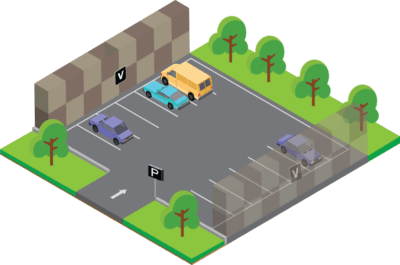
Put a clear sign at every entrance
A driver decides whether they may park in the first few seconds after pulling in, so the first sign they meet has to do the heavy lifting. Place a clearly visible board at each entry and exit, stating the type of parking — private, paid or time-limited — and who runs the site. This is the sign that establishes the terms the moment a vehicle enters.
Signs should face oncoming traffic and sit where a driver looks before committing to a bay, not tucked behind a pillar or a parked van.
- One entrance board at every way in and out
- Name the parking type and the operator up front
- Angle it toward approaching drivers, unobstructed
Design the sign so the terms read in seconds
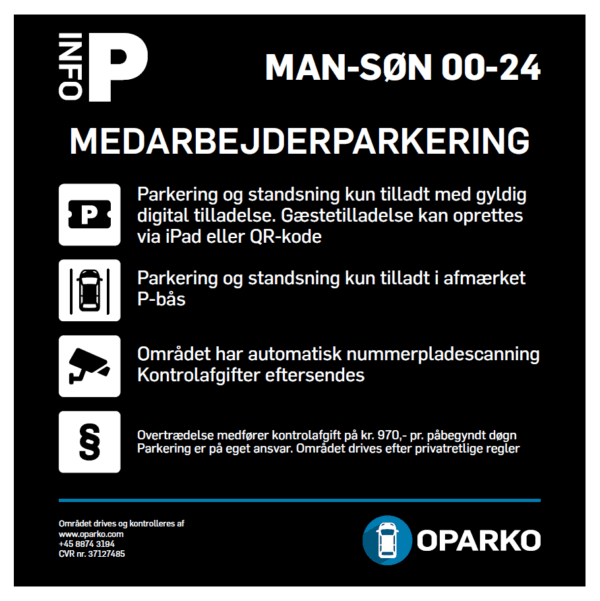
A good parking sign is scanned, not studied. Lead with a single heading that states the purpose — 'Private parking', 'Paid parking' or, as here, 'Employee parking' — then set out each condition as a short line paired with an icon. Keep the wording plain, the type large and the contrast high, so it reads from a car in poor light.
Every sign should also carry the essentials that make it act as a notice: the permitted hours, how to pay or get a permit, that the site uses ANPR if it does, the fee for breaking the terms, and the operator's name, contact details and company number.
- A purpose heading a driver grasps at a glance
- Conditions as short lines with matching icons
- Opening hours and how to pay or get a permit
- The fee amount and that the terms are enforced
- Operator name, contact and company registration number
Repeat the terms across the whole area
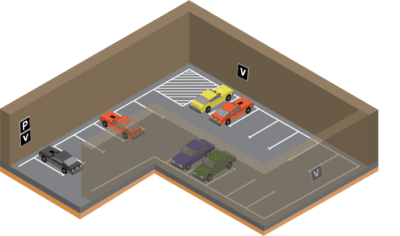
The entrance sign is not enough on its own. Post condition signs within the area too, so a driver parking at the far end or arriving through a side access still sees the terms. In a covered or multi-level car park, that means a sign on each level and at the stair and lift cores, not just at the vehicle entrance.
Mount them at a consistent height where they fall in a driver's line of sight — roughly windscreen to standing eye level — and keep them clear of foliage, delivery bays and anything that grows or gets parked in front of them.
- Terms repeated within the bays, not only at the entrance
- A sign on every level and at stair and lift cores
- Mounted at eye level and kept unobstructed
Keep signs legible, lit and current
A sign only works while it can be read. Light it so it is legible after dark, clean it, and replace any board that has faded, cracked or been covered by a sticker. A sign nobody can read is one a driver can fairly say they never saw.
Most important, keep what the sign says matched to what your system enforces. If you change the hours, the fee or the permit types in software, update the board the same day — a sign that contradicts your digital rules undermines every fee you raise from it.
The takeaway
Good signage is the cheapest enforcement you will ever buy: a clear entrance board, a sign designed to be read in seconds, the terms repeated across the site, and everything kept legible and in step with your digital rules. Get that right and most disputes never start.
Keep reading
Bring this to your car parks
Talk to an OPARKO parking consultant about what fits your sites, no obligation.